FAQ
What age is Rampage City designed for?
Do I need any tools, glue, or batteries?
No. Rampage City requires no tools, glue, or batteries. Just connect the tiles and start building.
How do Rampage City tiles stay together?
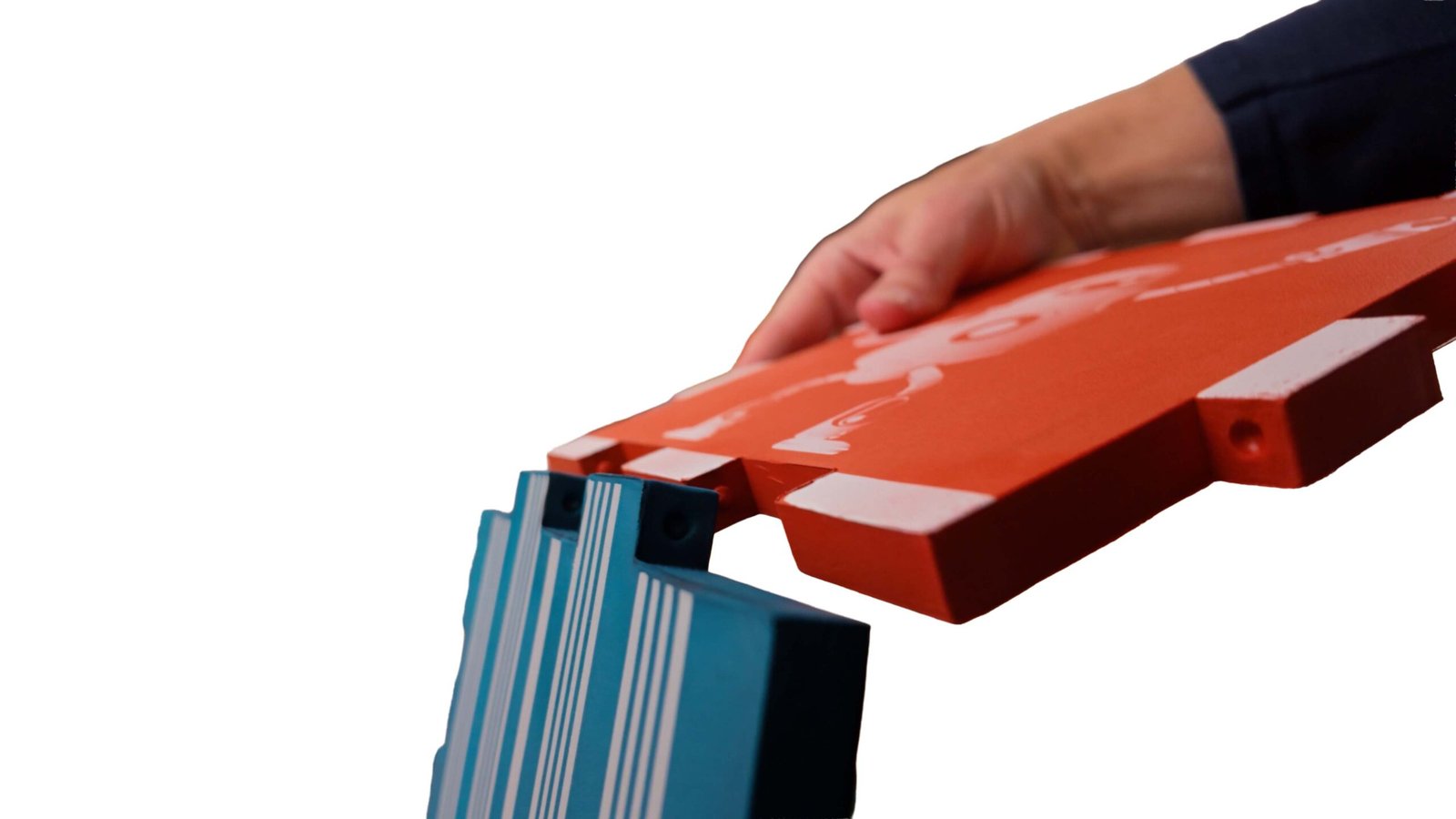
Rampage City tiles feature a clever interlocking design that securely connects each piece, allowing kids to build tall, sturdy structures that stay together during play—until it’s time to knock them down!
What are the foam tiles made of and are they safe?
Our foam tiles are made from high-quality EVA foam that is soft, durable, and kid-friendly. The foam is independently tested and meets strict U.S. toy safety standards (ASTM).
What are the action figures made of and are they safe?
Our character figures are made from TPE (Thermoplastic Elastomer), a flexible and durable material that is non-toxic, hypoallergenic, and designed to meet toy safety standards for children.
How long does it take to build a building?
Most builders can complete a building in approximately 15–30 minutes, depending on age and experience.
If I buy more, will I save?
- building is $40.00
- buildings are $38.00 each
- buildings are $36.67 each
- or more buildings are $35.50 each
How do I clean the foam tiles?
Simply wipe the tiles clean with a damp cloth. For tougher messes, you can use a mild soap or detergent.
Can I combine different Rampage City building sets?
Yes! All Rampage City tiles are compatible, so you can mix and match sets to create bigger buildings, larger cities, and endless custom designs.
Can I build my own designs?
Absolutely! The possibilities are endless. Rampage City encourages open-ended play, allowing builders to create their own unique skyscrapers, towers, bridges, fortresses, and mega-structures.
Can I rebuild the buildings after I knock them down?
Of course! Build, crash, rebuild, and repeat. That’s what Rampage City is all about.
Can I create a giant Mega City?
Yes! Combine multiple building sets to create a massive city filled with towering buildings, characters, and epic destruction.
Are the foam tiles durable?
Yes! Our EVA foam tiles are designed to withstand countless hours of building, crashing, and rebuilding.
Will the foam tiles damage furniture or walls?
No. The tiles are made from lightweight, soft foam that is designed for safe indoor play.
Can the action figures fit inside the buildings?
Yes! Character Figures are designed to interact with your buildings and become part of the action.
Does Rampage City help develop STEM skills?
Yes! Building structures encourages creativity, spatial awareness, problem-solving, engineering concepts, and fine motor skills.
What skills can kids learn while playing?
Kids develop creativity, planning, teamwork, hand-eye coordination, problem-solving skills, and imaginative storytelling.
Why is it called Rampage City?
Because every great city deserves an epic rampage! Build incredible structures, unleash your imagination, and then enjoy the most satisfying part—the crash. Build. Play. Demolish. Repeat.
What happens if a giant monster attacks my city?
Then it’s time for total destruction! Defend your city, unleash your Character Figures, and create your own epic adventure.
Can I build the tallest Rampage City tower ever?
Absolutely! Combine multiple sets to create giant skyscrapers, mega-buildings, and sprawling cityscapes. Challenge yourself to build your tallest tower and share it with us.
What makes a bigger crash?
More tiles. More buildings. More chaos. The bigger you build, the bigger the crash!
What are your shipping costs?
Please note that buildings, actions and shirts are all mailed separately. Shipping for:
- building is $12.00
- buildings is $23.90
- buildings is $35.80
- buildings is $47.70
- Action figures have a flat shipping rate of $5.25
- T-shirts shipping rates are based on your zip code
How can I get in touch?
We’d love to hear from you!
Contact us through our Contact Page or email us directly at hello@rampagecitytoy.com
How can I share photos or videos of my Rampage City creations?
We love seeing what our builders create!
Send your photos and videos through our Contact Page or tag us on social media. Your creation could be featured on our website, YouTube channel, or social media pages.
Are Construction Toys Good for Kids' Development?
The short answer is yes — and the evidence is substantial. Here’s what scientists, child development researchers, and major institutions have found.
1. Spatial Reasoning and STEM Skills
Data from a nationally representative American study show that children who play frequently with puzzles, blocks, and board games tend to have better spatial reasoning ability. This matters more than it might seem — researchers emphasize that block building and puzzle play can improve children’s spatial skills that in turn, support complex mathematical problem solving in middle and high school. nihMedium
The connection to math is particularly well-documented. Preschool children who showed a high level of block construction attained better math and reading achievement during their school years — from elementary through high school — even after controlling for other general cognitive abilities. ScienceDaily
2. Cognitive Flexibility and Executive Function
Children who participated in structured block play showed greater improvements in cognitive flexibility compared with kids in a control group. Cognitive flexibility — the ability to adapt thinking to new situations — is one of the core executive functions that predicts academic and life success. rampagecitytoy
According to Harvard University’s Center on the Developing Child, play strengthens executive function, which in turn helps kids learn to plan, focus, and adapt to new situations. Murray State’s Digital Commons
3. Creativity and Imaginative Play
Building blocks offer an open-ended play experience, allowing children to create their own unique structures and designs. There are no right or wrong ways to build with blocks, which gives kids the freedom to explore their imagination and express their creativity. PARENTING SCIENCE
Unlike toys with fixed outcomes, construction toys are open-ended. A single set can be used to build hundreds of different creations — one day a child might build a castle, the next day it could become a spaceship or a city. ScienceDirect
4. Social Skills, Communication, and Leadership
Construction play boosts communication in multiple ways: children share ideas about what to build, ask for help, and give instructions to friends on how to put things together. Some kids naturally take charge, and this kind of play helps them learn how to lead a group, make decisions, and resolve conflicts. rampagecitytoy
The American Academy of Pediatrics has found that unstructured playtime helps children learn self-regulation and social problem-solving. Murray State’s Digital Commons
5. STEAM Development Through Spatial Language and Storytelling
A peer-reviewed study published in the NIH found that construction toys offer affordances to elicit spatial language, gesture, and narrative among child-caregiver pairs — interactions that are essential for the development of spatial skills in both children and their caregivers. In other words, when kids talk about what they’re building — and why — the developmental benefits multiply. Tough Trucks For Kids
6. Fine Motor Skills and Physical Development
Construction toys strengthen key developmental skills including fine motor coordination, visual spatial reasoning, creativity, logical thinking, patience, and persistence. Construction toys allow children to see immediate results from their actions, which reinforces learning through feedback. rampagecitytoy
Rampage City is a construction toy with an added dimension that most building sets don’t have: creative destruction. Kids don’t just build — they build with the intention of smashing it down and building again. This cycle of construction, destruction, and reconstruction maps directly onto the research benefits above. Every rampage is a spatial reasoning exercise. Every rebuild is a lesson in structural thinking. Every story kids tell with the figures is the narrative and imaginative play that researchers say multiplies the cognitive benefits of construction play.
The science says building toys are good for kids. Rampage City gives kids a reason to keep building.
How Do Building Toys Help with Problem-Solving Skills?
Every parent has watched a child struggle with a tower that keeps falling, a structure that won’t stay upright, or a design that refuses to work — and then watched that same child quietly figure it out. That moment of perseverance and self-correction isn’t just cute. It’s one of the most important cognitive processes a young brain can practice. Here’s what the research says about why building toys are among the most powerful problem-solving tools available to children — and why the way a toy is designed matters just as much as the fact that it builds.
1. Building Toys Teach the Scientific Method Without Kids Knowing It
Child development research shows that hands-on play activates multiple areas of the brain involved in planning, reasoning, and spatial understanding. When children build, they don’t simply follow steps — they make predictions, test outcomes, and self-correct. This mirrors the scientific method and strengthens executive function: the mental framework that supports focus, flexible thinking, and strategy. Affectautism
In other words, every time a child stacks a block, watches it fall, and tries a different approach, they are running a small experiment. The toy is the laboratory. The child is the scientist.
2. Open-Ended Play Develops Independent Thinking
Construction toys do not come with one “right” answer. Blocks, connectors, and building kits allow endless designs. A child decides what to build, how to build it, and when to change plans. This freedom trains independent thinking. Research published by the National Association for the Education of Young Children links open-ended play with stronger problem-solving and creative reasoning. PubMed Central
The absence of a single correct answer is a feature, not a limitation. When there is no instruction manual to follow, the child’s brain has to do the work — and that work is exactly where problem-solving ability grows.
3. Trial and Error Builds a Growth Mindset
Research shows that children who engage in constructive play perform better in later problem-solving tasks. They learn that every mistake is useful data — and that innovation comes from iteration rather than perfection. Affectautism
Play provides a safe space for trial and error, allowing children to experiment with different approaches and learn from mistakes. Encouraging persistence in problem-solving games and creative activities fosters resilience and a love for learning. BiggoBlocks
This is the growth mindset in its purest form — not taught through a poster on a classroom wall, but lived through the repeated experience of trying, failing, adjusting, and succeeding.
4. Building Toys Strengthen Executive Function
Play experiences help children develop executive functioning abilities, including organizing, planning, making decisions, and self-control — all part of play activities that navigate through scenarios and help children overcome issues, obstacles, and riddles. Complexneeds
Studies from Harvard University’s Center on the Developing Child show that active play strengthens executive function skills such as planning, focus, and problem correction. Construction toys deliver this training naturally. PubMed Central
Executive function is the set of cognitive skills that determines how well a child can plan, focus attention, remember instructions, and manage competing demands. It predicts academic success more reliably than IQ — and building toys train it every single session.
5. Physical Play and Cognitive Skills Are Deeply Connected
Research shows that hands-on activities help strengthen brain pathways responsible for problem-solving and decision-making. When children build, they naturally experiment with trial and error, figuring out what works and what doesn’t — testing hypotheses, analyzing failures, and refining strategies at the core of problem-solving. nih
The hand-brain connection is not metaphorical. Motor engagement and cognitive development are neurologically linked in early childhood, which is why the most effective problem-solving toys are the ones that get kids physically involved in the process.
6. Resilience: The Problem-Solving Skill That Lasts a Lifetime
Through play, children learn to cope with small failures and try again, fostering a mindset that embraces challenges as opportunities for growth. Executive functioning games and playful challenges teach children to make decisions, plan, and adapt — skills that are crucial for academic success and everyday tasks. Pioneerpublisher
Resilience isn’t taught in a single lesson. It’s built through thousands of small moments where a child faces a setback, stays with the problem, and finds a way forward. Building toys generate those moments naturally, repeatedly, and without pressure.
📎 Source: Supporting Child Development Through Play — Sensory Project
Why Rampage City Takes Problem-Solving a Step Further
Most building toys stop at construction. Rampage City adds a dimension that most building sets never consider — and it turns out to be the one that makes problem-solving play most engaging and most repeatable: creative destruction followed by rebuilding.
Here’s why that matters.
The rebuild is where the real problem-solving lives. After a rampage, the city is on the floor. Now what? Kids have to make decisions — fast and under the self-imposed pressure of wanting to play again. Which buildings come first? What went wrong with the structure last time? How do we build it stronger, taller, or differently so it makes a better battle next time? These aren’t abstract questions. They are genuine engineering and strategic problems that kids solve through play, every single session.
Destruction without consequence removes the fear of failure. One of the biggest barriers to problem-solving development is fear — the reluctance to try something that might not work. Rampage City eliminates that barrier entirely. The whole point is for the city to fall. There is no wrong outcome, no ruined masterpiece, and no reason not to try something new next time. That freedom is exactly the psychological conditions that researchers identify as optimal for developing a growth mindset.
Every battle is a new problem to solve. What angle brings the building down fastest? Which figure is best positioned to defend? How do you structure a tower that creates the most dramatic collapse? Kids answer these questions without realizing they are doing structural reasoning, tactical planning, and cause-and-effect analysis — which is precisely what makes Rampage City a problem-solving toy disguised as the most fun thing in the room.
Storytelling adds a layer of strategic thinking. When kids use Rampage City’s action figures to build narratives around their battles, they are practicing scenario planning — thinking ahead about what happens next, who wins, and what the consequences of each move will be. This narrative problem-solving is the same cognitive skill that underlies reading comprehension, social reasoning, and creative thinking.
The cycle never gets old. Because Rampage City is designed to be rebuilt infinitely, kids return to the same problem-solving loop again and again — but each time with new information, new strategies, and new stories. The toy doesn’t wear out. The problem-solving practice deepens every time they play.
The Bottom Line
Building toys help children develop problem-solving skills by giving them a low-stakes environment to plan, test, fail, adjust, and try again — over and over, without pressure or judgment. The research is clear: this kind of play builds executive function, spatial reasoning, resilience, and the kind of flexible thinking that carries children through school and far beyond it.
Rampage City gives kids all of that — and then adds something most building toys never thought to include: a reason to knock it all down and start solving the problem again.
If you have other questions please us an email at hello@rampagecitytoy.com